
What is the best microphone for recording an electric guitar amp?
There is one, famous, that stands out from the rest. And you should have it.
But there are also several others, equally excellent, that stand out and provide access to varied recording colors.
When you record an electric guitar by mic’ing a speaker, the choice of microphone is crucial: it will literally shape your sound and thus the character of your mixes.
Unsurprisingly, we won’t use quite the same mics for electric guitar as for acoustic guitar or for vocals.
To help guide you a bit in your choices and research, I have created this list of 9 microphones selected because they are:
- recognized and used worldwide for recording electric guitar amps;
- associated with a price generally accessible to home studio users, namely between €90 and €800 — so no microphones at €1500 that only professional studios can afford.
They are also ranked by price, except for the first one (and you will understand why).
Info: Feel free to ask your questions in the comments of this article, I will respond as soon as possible 😉

What Type of Microphone for Amps?
As always in the studio, it is important to define the type and the directivity of the microphone sought.
The Type
For mic’ing a guitar amp, it is possible to use almost all existing types of mics.
However, dynamic microphones and ribbon mics are most often chosen.
For dynamics, it goes without saying: a bit less sensitive, they generally handle the high volume levels of guitar amps very well.
For ribbon microphones, beyond their sensitivity, they are very useful because they reduce the “fizz” of amps, which is the crackling in the highs that can sometimes be aggressive to the ear.
On the other hand, I recommend avoiding condenser microphones. In fact, I have not included any in this article. Although it is possible to use them in certain situations, they have several drawbacks:
- they are too sensitive in the highs, which is rarely good for electric guitar recording;
- they can saturate quite quickly if the volume is high;
- although individually they can sound very good, during mixing it will be more difficult to integrate them with the rest of the instruments.
The Directivity
Since you are recording a directional sound coming from the speaker, it makes the most sense to use cardioid or hypercardioid microphones.
However, “figure 8” type directivities are also very nice for a slightly more open sound, highlighting the characteristics of the room you are recording in.
Note that for ambient sound recording, nothing prevents you from using omnidirectional microphones. However, since this is not necessarily a common practice, I have not selected any for this list.
1. Shure SM57

Brand: Shure
Type: Dynamic
Polar Pattern: Cardioid
If I had to pick just one microphone from this list, it would probably be this one.
Don’t be fooled by its low price, it is a true reference when it comes to capturing electric guitars. It has indeed been used on thousands of albums, from the Rolling Stones to Megadeath, including Nickelback and Radiohead!
Built to last, the Shure SM57 (which, contrary to some myths, differs slightly from the Shure SM58) is relatively insensitive to low frequencies (< 100 Hz). This characteristic, combined with a pronounced presence peak between 2 and 10 kHz, gives a clear and cutting sound that stands out effortlessly in the mix.
An excellent mic!
2. Audix i5

Brand: Audix
Type: Dynamic
Polar Pattern: Cardioid
Although it is the cheapest on this list, the i5 from the American brand Audix is still a very good alternative to the SM57 presented just before.
It has a boost in the highs as well as in the lows, between 100 and 200 Hz — which gives its audio spectrum a sort of “smile” resulting in a sound slightly scooped in the mids and quite modern.
It stands out well in the mix without being too aggressive.
► See the current price on: Thomann Woodbrass Amazon
3. Sennheiser E609

Brand: Sennheiser
Type: Dynamic
Polar Pattern: Supercardioid
The E609 from the famous brand Sennheiser was designed for close miking of the amplifier.
It has a pronounced proximity effect, as well as a peak around 5 kHz giving it a rather clear and bright sound. While it can certainly be used for all types of guitar recordings, I find it particularly nice on clean or slightly overdriven sounds.
Notably, an interesting feature: thanks to its well-thought-out shape, the E609 does not need a dedicated stand: you can very well let it hang just in front of the amp, and it will do its job wonderfully.
► See the current price on : Thomann Woodbrass Amazon
4. Beyerdynamic M 201 TG

Brand : Beyerdynamic
Type : Dynamic
Directivity : Hypercardioid
The M 201 TG from Beyerdynamic is characterized by a fairly flat frequency spectrum with a slight presence boost around 10 kHz, although like most, it is sensitive to the proximity effect.
Solid and well-built, it will deliver a rather natural and rich sound, possessing a certain transparency and clarity that is very appreciated.
Capable of recording both clean sounds and metal, it proves to be very versatile.
Tip: try to keep it a bit away from the speaker to make the most of its natural sounds.
► See the current price on : Thomann Woodbrass
5. Heil PR 30

Brand : Heil Sound
Type : Dynamic
Directivity : Cardioid
While it is less famous than the SM57 in home studios, the PR 30 from Heil is still an interesting and high-quality alternative for electric guitar recordings.
Its spectrum, fairly flat in the mids, has a boost in the sub-bass (below 100 Hz) and a marked peak between 2 and 10 kHz, which may explain the quality of the results it delivers on guitar amplifiers.
The sound has very good definition, especially for hard rock/metal guitars with high gain: it is articulated, powerful, and warm, but never aggressive. The bass is supported without being too present.
Finally, due to its construction, it has a very low proximity effect — which is often quite appreciated.
► See the current price on : Thomann Amazon
6. Sennheiser MD421

Brand : Sennheiser
Type : Dynamic
Directivity : Cardioid
Another reference for guitar amp recording! 🙂
Very solidly built, the MD421 from Sennheiser features a 5-position low-cut filter, giving it true versatility.
In general, it offers a sound that is a bit more coherent than the SM57, meaning more precise and with more definition, especially in the high-mids and lows (you can for example check out this comparison video).
The MD421 is an excellent microphone. However, it is often useful to pair it with a second, more aggressive mic, such as the SM57.
► See the current price on: Thomann Woodbrass
7. Beyerdynamic M 160

Brand: Beyerdynamic
Type: Ribbon
Directivity: Hypercardioid
This is a ribbon microphone, unlike those presented earlier. Predictably, the sound is very warm and natural, particularly due to a drop in frequencies above 10 kHz that removes aggressiveness from the sound of amplifiers.
The M 160 thus delivers a somewhat vintage sound, detailed and silky yet quite balanced at the same time.
Used by Eddie Kramer on some Led Zeppelin and Jimi Hendrix albums (!), it will prove most interesting when placed a bit away from the amp to capture the ambiance of the room — and why not combined with an SM57…
► See the current price on: Thomann Woodbrass Amazon
8. Electro-Voice RE20

Brand: Electro-Voice
Type: Dynamic
Directivity: Cardioid
The famous RE20 from the American brand Electro-Voice is a very high-quality microphone that handles high volume levels well.
It is therefore particularly effective for rock and metal, with fairly smooth mid-highs and neutral highs.
One of its great advantages lies in its very flat frequency response. Moreover, thanks to proprietary technology from the brand, it is not subject to any proximity effect, which makes positioning easier.
A high-end dynamic microphone!
► See the current price on: Thomann Woodbrass Amazon
9. Royer R-101

Brand: Royer Labs
Type: Ribbon
Directivity: Figure 8
The R-101 is the little brother of the famous R-121, which is often talked about but whose price (over €1400 at the time of writing) seems to be a bit extreme for most home studios.
The R-101, half the price, is just as interesting. It partly uses the same technology and is itself an excellent ribbon microphone, particularly effective for recording electric guitars.
The sound has a vintage analog feel, very natural with a fairly round response in the low mids. It can be easily paired with an SM57 or an MD421 for more sound options.
► See the current price at: Thomann Woodbrass
Need a little gain?
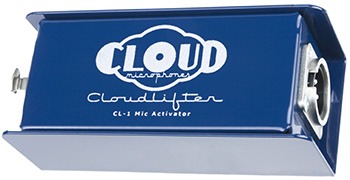
In general, dynamic and ribbon microphones are less sensitive than condenser microphones.
You will therefore potentially need more gain to properly record your sounds.
The problem is that on most audio interfaces used in home studios, you will only have access to relatively low gain (50 dB in the case of a Focusrite Scarlett 2i2, for example).
If you find yourself in a situation where you are forced to push your preamps “to the max” (which would add noise), I recommend getting a Cloudlifter CL-1.
Simply put, it is a box that connects between the microphone and the audio interface, adding +25 decibels of gain while keeping background noise to a minimum.
Of course, depending on the dynamic or ribbon microphone and the power of the source you are recording, having a Cloudlifter may not always be necessary. That said, it is a really useful tool that will help you get the best sound from your microphones.
► See the current price at: Thomann Woodbrass Amazon
To go further…
There you go, you should now have a good overview of the best mics for capturing amps.
To go further, check out my complete file on methods for recording electric guitar.